Table of contents
What Is TMJ Pain?
What Are the Symptoms of TMJ Pain?
What Causes TMJ Pain?
How to Treat TMJ Pain
How to Prevent TMJ Pain
Final Thoughts
What Is TMJ Pain?
Your Guide to Understanding and Managing Jaw Joint Disorders
Do you ever feel pain or discomfort when you chew, talk, or yawn? If so, you might be dealing with TMJ pain. TMJ stands for the temporomandibular joint—the hinge that connects your jaw to your skull. When this joint isn’t working properly, it can cause a range of frustrating and even painful symptoms.
Let’s break down what TMJ pain is, why it happens, and what you can do to feel better.
What Are the Symptoms of TMJ Pain?
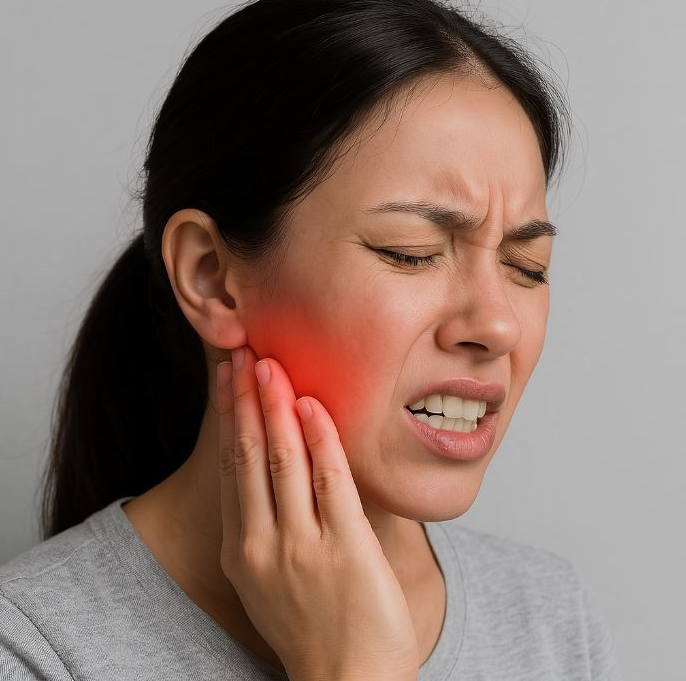
TMJ disorders can show up in different ways. Some of the most common symptoms include:
- Pain when opening or closing your mouth
- Clicking, popping, or grinding sounds in the jaw
- Trouble opening your mouth wide
- Headaches or earaches
- Discomfort while chewing
- Pain that spreads to your face, neck, or shoulders
What Causes TMJ Pain?
TMJ pain can be triggered by a variety of factors. Here are some of the most common:
- Frequent Chewing: Constantly chewing gum or eating tough foods puts strain on your jaw.
- Teeth Grinding or Clenching: This often happens during sleep without you even knowing it.
- Stress: Tension can lead to tight jaw muscles and unconscious clenching.
- Jaw Injury: A blow to the jaw or face can damage the joint.
- Misaligned Bite: When your teeth don’t line up properly, it can affect how your jaw moves.
How to Treat TMJ Pain
✅ Self-Care Tips
Here are a few simple things you can try at home:
- Hot & Cold Compresses
Use a cold pack for 10–15 minutes to reduce swelling, followed by a warm towel for 15–20 minutes to relax the muscles. - Stick to Soft Foods
Avoid hard, chewy, or crunchy foods. Cut your food into small bites and chew gently. - Jaw Exercises & Massage
Gentle stretches and massages can help ease tension. Try recommended TMJ exercises daily for best results. - Practice Good Posture
Avoid looking down at your phone too much and keep your monitor at eye level when using a computer. - Prevent Teeth Grinding
Wear a night guard if you grind your teeth while sleeping. Also, try stress-relief techniques like meditation, deep breathing, or yoga.
✅ Professional Treatment Options
If home remedies aren't enough, your dentist or healthcare provider might suggest:
- Physical Therapy
Treatments like massage or ultrasound therapy to relieve jaw muscle tension. - Medications
Over-the-counter pain relievers (NSAIDs) or muscle relaxants to reduce pain and inflammation. - Orthodontic Treatment
Braces or clear aligners to fix bite alignment. - Botox Injections
Used in some cases to relax overworked jaw muscles. - Surgery (for severe or chronic cases)
Options like arthroscopy or joint reconstruction may be considered as a last resort.
How to Prevent TMJ Pain
Prevention is key—here’s how you can reduce your risk:
- Chew evenly on both sides of your mouth
- Avoid resting your chin on your hand
- Cut back on gum, jerky, or other tough snacks
- Do regular jaw stretches and relaxation techniques
- Visit your dentist regularly for check-ups
Final Thoughts
TMJ pain is more common than you might think—but it doesn’t have to take over your life. With early care, simple lifestyle changes, and (if needed) professional help, you can ease your symptoms and keep your jaw feeling great.
If the pain sticks around or starts getting worse, don’t wait—talk to your dentist or a TMJ specialist for personalized treatment options.
👇 한국어 버전 보기!
턱이 아프다면? 턱관절 원인부터 치료까지 한눈에 정리!
목차(contents)1. 턱관절 통증이란? 2. 턱관절 통증의 주요 증상 3. 턱관절 통증의 주요 원인 4. 턱관절 통증 치료 방법 1) 자가 관리법 2) 전문 치료법 5. 턱관절 통증 예방 방법 6. 결론 -->1. 턱관절 통
lifehealingmaker.tistory.com


